
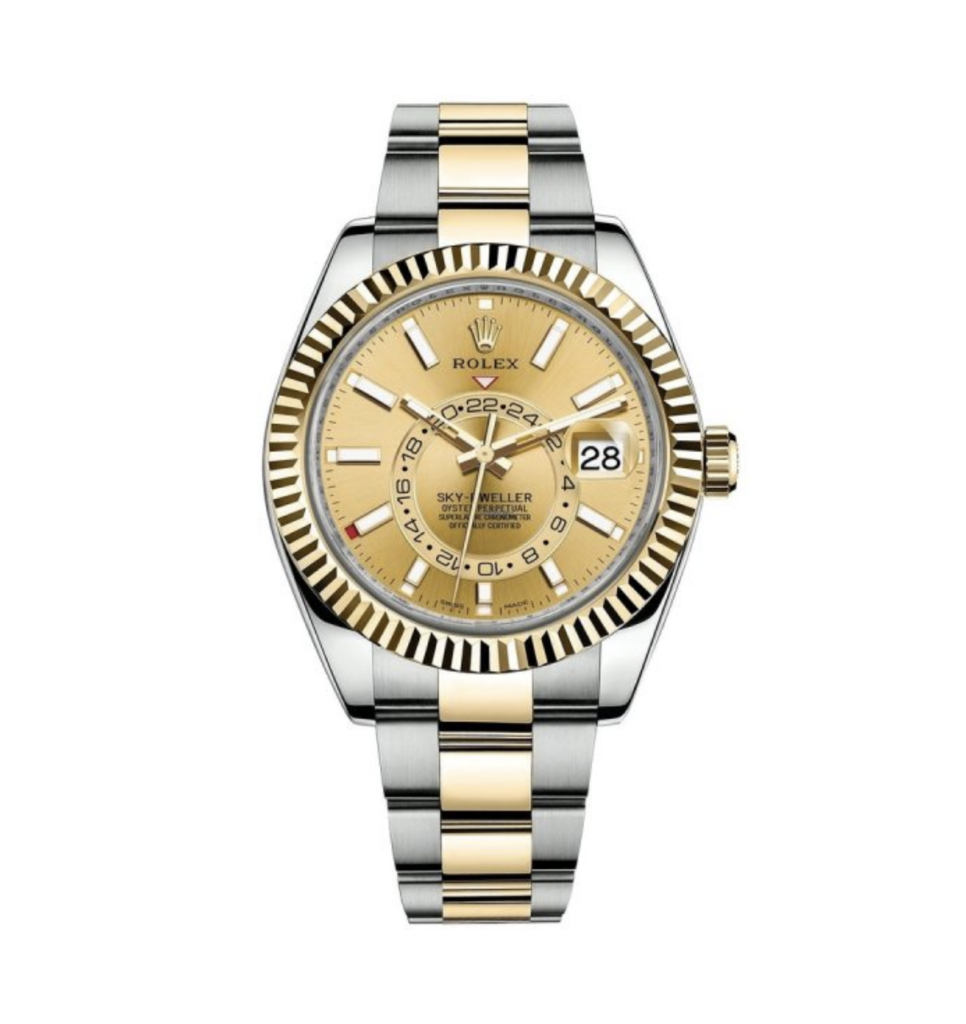
In the world of horology, a watch complication is any function beyond simple time display. From the humble date window to the mesmerising tourbillon, complications represent the pinnacle of watchmaking artistry. Understanding these features will help you appreciate — and choose — your perfect luxury watch.
Every complication requires additional parts within the movement — a perpetual calendar can add over 100 components to a watch’s mechanism.
Simple Complications
Date Display
The most common complication. A date window (aperture) shows the current day of the month, typically at 3 o’clock. Rolex pioneered the Cyclops magnifying lens above the date window, which has become one of the brand’s most recognisable design signatures.
Day-Date
Displays both the day of the week and the date. Famously associated with the Rolex Day-Date (the “President’s watch”), this complication adds a day display at 12 o’clock and a date at 3 o’clock.
Power Reserve Indicator
A gauge showing how much energy remains in the mainspring. Essential for collectors who rotate multiple watches and want to know when a timepiece needs winding.
Intermediate Complications
Chronograph
A built-in stopwatch function with start, stop, and reset capabilities. The Rolex Daytona is the most famous chronograph watch in the world. Modern chronographs typically feature:
- Running seconds sub-dial
- 30-minute counter
- 12-hour counter (in tri-compax layouts)
- Tachymeter bezel for calculating speed
GMT / Dual Time Zone
Displays a second time zone using an additional hour hand and a 24-hour bezel. The Rolex GMT-Master II is the benchmark, created in 1955 for Pan Am airline pilots who needed to track two time zones simultaneously.
Moon Phase
A poetic complication that displays the current phase of the moon through an aperture in the dial. The most accurate moon phase mechanisms are off by only one day every 122 years.
Grand Complications
Perpetual Calendar
Automatically accounts for months with 28, 30, and 31 days, as well as leap years. Once set correctly, a perpetual calendar will display the correct date until 2100 (when the Gregorian calendar skips a leap year). This is one of the most impressive feats in mechanical watchmaking.
Minute Repeater
Chimes the time audibly when a slide on the case is activated. The watch uses tiny hammers striking tuned gongs to sound the hours, quarter-hours, and minutes. A minute repeater is considered the ultimate test of a watchmaker’s skill, requiring extreme precision to produce clear, harmonious tones.
Tourbillon
Invented by Abraham-Louis Breguet in 1801, the tourbillon places the escapement and balance wheel inside a rotating cage that completes one revolution per minute. This rotation counteracts the effects of gravity on the movement’s accuracy. While modern testing shows the practical accuracy benefit is minimal, the tourbillon remains the most visually captivating and technically demanding complication in horology.
Choosing Your Complications
For everyday wear, a date and perhaps a chronograph offer the best combination of functionality and reliability. For collectors seeking the extraordinary, a GMT with moon phase or a perpetual calendar offers tremendous horological depth.
Explore our complete collection at Grand Watch Club — featuring Datejusts, Daytonas, GMT-Masters, and more, each with meticulously replicated complications that function exactly as the originals.
Step-by-Step Summary
Following the guidance above, here is a quick-reference checklist you can use whenever you are evaluating a super clone watch purchase or caring for one you already own:
- Check the movement: Request a video of the running movement before purchasing. A quality super clone movement sweeps smoothly at 8 ticks per second.
- Verify the materials: 904L steel should feel heavier and have a brighter finish than standard 316L. Ask the seller to confirm the steel grade.
- Inspect the crystal: A genuine sapphire crystal will show a faint blue-green AR coating in certain lighting. Tap it — sapphire produces a higher-pitched click than mineral glass.
- Review the packaging: Quality super clones come with a proper presentation box, warranty card, and paperwork. If any of these are missing, question the seller.
- Confirm the warranty: Reputable sellers offer at least a 1-year warranty covering movement defects. Grand Watch Club provides this on every watch we sell.
Common Mistakes to Avoid
The most common mistake buyers make is prioritising price over quality. A super clone priced at under £100 will almost always use a low-grade movement and 316L steel — components that will degrade quickly. The sweet spot for genuine quality is £300–£600, which is where Swiss-grade movements and premium materials are standard. At Grand Watch Club, our entire range sits within this bracket. Anyone shortlisting references will find 1:1 super clone watches catalogued at Super Clone Luxury.
Where to Buy with Confidence
Purchasing from a reputable, established retailer removes most of the risk associated with buying super clone watches online. Grand Watch Club offers verified Swiss-movement super clones, free worldwide shipping, discreet packaging, and a 1-year warranty on every piece. Our customer support team is available 7 days a week.
How do I know if a super clone watch is good quality?
The key indicators of quality in a super clone watch are: a smooth-sweeping Swiss automatic movement, 904L stainless steel case, genuine sapphire crystal with AR coating, correct weight (within 1–2 grams of genuine), and proper finishing on the case and bracelet. Reputable sellers will provide detailed photos and video of these elements before purchase.
What is the safest way to buy a super clone watch online?
Buy from an established retailer with verifiable reviews, a clear warranty policy, and transparent shipping information. Avoid marketplaces like eBay or Aliexpress for super clones — the quality is unverifiable. Grand Watch Club ships discreetly with tracked delivery and provides a 1-year warranty on every watch.
Grand Watch Club
Ready to Own a Super Clone Watch?
Browse our full collection of 1:1 super clone Rolex, Patek Philippe, and Audemars Piguet watches.
Browse Our Collection →📚 You Might Also Like
⏱ Featured Watches
- Super Clone Santos de Cartier Green Dial
- Super Clone Patek Aquanaut Black – Japanese Miyota
- Reduced Rolex Day-Date Two Tone Green Diamond Dial Oyster Bracelet — £299.00
- Super Clone Patek Philippe Aquanaut Chronograph 5968R-001 Brown Dial Rose Gold 42.2mm – Swiss SuperClone
- Super Clone Patek Philippe Aquanaut 40mm Rubber Strap Steel – Swiss SuperClone 5168G – Japanese Miyota
- Super Clone Patek Philippe Aquanaut Rubber Strap Steel – Japanese Miyota