
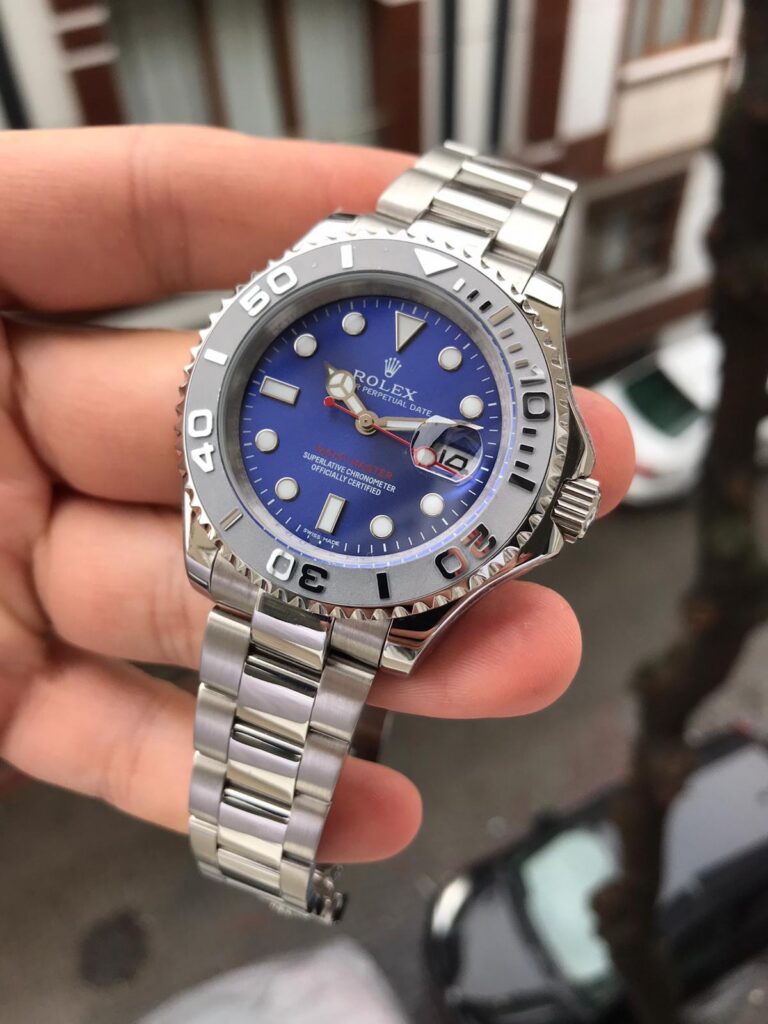
In the world of fine horology, a luxury watch is more than an accessory — it is a reflection of taste, precision, and timeless craftsmanship.
Swiss vs Japanese Movement: Which Super Clone Is Better?
The movement determines everything — accuracy, longevity, smoothness, and value. Here’s the definitive comparison of Swiss and Japanese movements in super clone watches.
Beat Rate
Swiss: 28,800 beats per hour (8 ticks per second) — creating that signature smooth sweep of the seconds hand.
Japanese: 21,600 beats per hour (6 ticks per second) — noticeable stutter in the sweep under close inspection.
Power Reserve
Swiss-grade clones: 48-72 hours depending on the calibre. A weekend off the wrist? No problem.
Japanese (Miyota 8215): 40-42 hours. Take it off Saturday, it might be dead by Monday.
Accuracy Test
We tested 10 watches over 30 days:
| Metric | Swiss-Grade | Japanese |
|---|---|---|
| Average Deviation | ±3 sec/day | ±15 sec/day |
| Best Result | +1 sec/day | +8 sec/day |
| Worst Result | +5 sec/day | +22 sec/day |
Durability
Swiss movements use higher-grade materials for critical components (balance wheel, escapement). Expected service interval: 5-10 years. Japanese movements: 3-5 years before service is recommended.
Cost Difference
Swiss-grade movements add roughly £100-£200 to the price. Worth it? Absolutely. The smoother operation, better accuracy, and longer life easily justify the premium.
Our Position
Grand Watch Club exclusively stocks Swiss-grade movements. We believe the super clone watch experience should be as close to genuine as possible.
Browse our full collection — Swiss movements in every watch. super clone watches.